Jack-o'-Lantern LoreNo. 4502 · The 2026 edition
6 Things You May Not Know About Pumpkins
Pumpkins are more than just a seasonal decoration. Discover six surprising facts about these iconic gourds that will change how you see them forever.
Our own summary of the original — the full post and photos live at history.com.

Pumpkins have a rich history that goes far beyond their role in modern Halloween celebrations. This article explores six lesser-known facts about pumpkins, including their origins, cultural significance, and unique characteristics. From their ancient roots in Central America to their evolution into a symbol of autumn festivities, pumpkins hold a fascinating place in history. Learn about their nutritional benefits, traditional uses, and the surprising ways they have been celebrated across different cultures. Whether you are a pumpkin enthusiast or simply curious about the stories behind this fa
About this
Pumpkins have a rich history that goes far beyond their role in modern Halloween celebrations. This article explores six lesser-known facts about pumpkins, including their origins, cultural significance, and unique characteristics. From their ancient roots in Central America to their evolution into a symbol of autumn festivities, pumpkins hold a fascinating place in history. Learn about their nutritional benefits, traditional uses, and the surprising ways they have been celebrated across different cultures. Whether you are a pumpkin enthusiast or simply curious about the stories behind this fa
Facts from the original
- Pumpkins are a member of the gourd family, which includes cucumbers, honeydew melons, cantaloupe, watermelons and zucchini. These plants are native to Central America and Mexico, but now grow on six continents—all but Antarctica.
- Indigenous North Americans have grown pumpkins for thousands of years—even before the cultivation of beans and corn.
- The name pumpkin originated from the Greek word Pepõn, which means large melon. It was then nasalized by the French into "pompo", which the English changed "pompon" to "Pumpion," and so on until American settlers arrived at the word we use today.
- According to the 2017 U.S. Agriculture Census, Illinois is the largest producer of pumpkins in the United States. It harvests twice as many pumpkin acres as any of the other top-producing states.
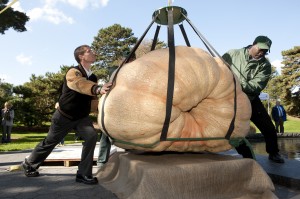
- The heaviest pumpkin was grown in Belgium in 2016 and weighed a whopping 2,624 pounds. The heaviest pumpkin in the U.S. was grown in New Hampshire in 2018 and weighed 2,528 pounds. The largest pumpkin pie ever baked was in Ohio in 2010. It weighed 3,699 pounds and was over 20 feet in diameter.
- Pumpkin seeds should be planted between the last week of May and the middle of June. They take between 90 and 120 days to grow and are picked in October when they are bright orange in color. Their seeds can be saved to grow new pumpkins the next year.
More photos


Photos hosted by history.com.