Folklore & LegendsNo. 7278 · The 2026 edition
The Strange History of Halloween
Discover the ancient origins and peculiar traditions that shaped our modern Halloween celebration.
Our own summary of the original — the full post and photos live at thenotsoinnocentsabroad.com.

This article delves into the bizarre and fascinating history of Halloween, tracing its roots from the Celtic festival of Samhain through Roman and Christian influences to the spooky holiday we know today. Learn about the evolution of costumes, trick-or-treating, and other customs that emerged from centuries of folklore and superstition.
About this
A short blog post from The Not So Innocents Abroad exploring the pagan origins of Halloween. It covers Samhain, the thinning veil between worlds, divination spells, and the roots of modern customs like jack-o'-lanterns, costumes, and trick-or-treating. The article includes personal anecdotes and references an infographic that is no longer available.
Facts from the original
- The article is titled 'The Strange History of Halloween'.
- It was written by Wally Wright and published on October 24, 2016.
- It is filed under the Festivals category.
- The post asks why people carve pumpkins, wear costumes, and go trick-or-treating.
- It promises to explain the pagan origins of Samhain, a time when spirits roam the Earth and people can see into the future.
- It states that Halloween is the best time to cast divination spells.
- It notes that people either love or hate Halloween.
- The author's office manager dreads Halloween because she is religious and views it as an evil night when devils, witches, demons, and ghouls literally roam the streets.
- Many people love Halloween because it lets them become someone else for a night and embrace their dark or sexy sides.
- Pre-Christian Celts of Western Europe called the holiday Samhain, pronounced 'sow-en'.
- Samhain is a term still used by Wiccans.
- Samhain is said to be the one day of the year when the veil between this world and the next is thinnest.
- Halloween has a dark side but can also be a time of good luck.
- It is an ideal opportunity to try to glimpse into the future.
- Divination spells are said to work best on All Hallow's E'en.
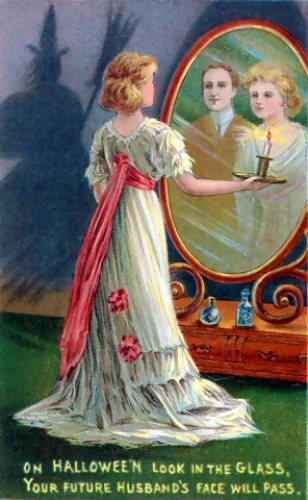
- Young women would try to glimpse their future lover's face in a mirror on Halloween night.
- To get into the Samhain spirit, the post suggests trying spells to contact a deceased loved one and to see a vision of your true love.
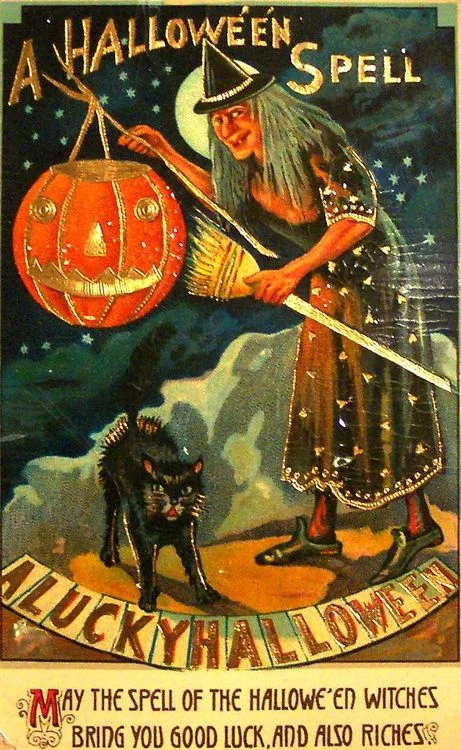
- Witches, black cats, and jack-o'-lanterns have become associated with Halloween.
- Ghosts and other unpleasant wraiths can invade the world of the living once darkness falls.
- People felt a need to protect themselves from such spirits.
- The post asks how these origins led to the traditions of carving pumpkins into jack-o'-lanterns, dressing in costumes, and asking for candy with thinly veiled threats of mischief.
- It calls Halloween our strangest holiday.
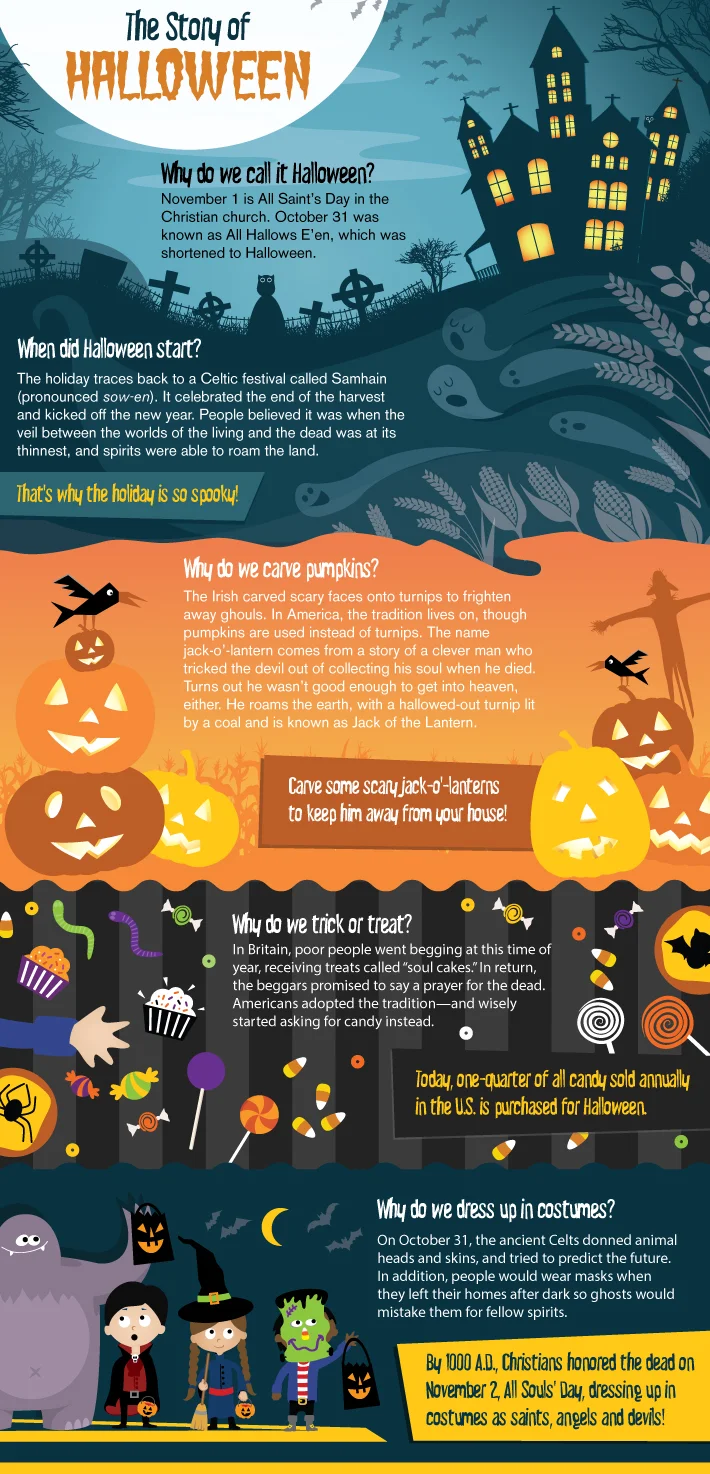
- The author wrote an infographic for a now-defunct website, and Kevin LeVick designed it.
- The post is tagged with folklore, festivals, USA, England, Ireland, Halloween, ghosts, and Britain.
From the original
The Strange History of Halloween is a blog post by Wally Wright, published October 24, 2016, under the Festivals category. It opens by noting that Halloween is a love-it-or-hate-it holiday: the author's religious office manager dreads it as an evil night when devils, witches, demons, and ghouls roam the streets, while others enjoy the chance to become someone else and embrace their dark or sexy sides. The post traces the holiday to the pre-Christian Celts of Western Europe, who called it Samhain, pronounced sow-en, a name still used by Wiccans. Samhain is described as the one day of the year when the veil between this world and the next is thinnest, making it the best time for divination and a chance to glimpse the future. It was also a time when ghosts and unpleasant wraiths could cross into the living world, so people felt they had to protect themselves. The author mentions that young women once tried to see their future lover's face in a mirror on Halloween night, and suggests spells for contacting a deceased loved one or seeing a vision of true love. The post links these pagan origins to modern traditions such as carving pumpkins into jack-o'-lanterns, wearing costumes, and asking for candy with thinly veiled threats of mischief. Witches, black cats, and jack-o'-lanterns have become associated with Halloween. The page also notes that the author wrote an infographic for a now-defunct website, designed by Kevin LeVick, though the infographic itself is not reproduced in the text.
More photos
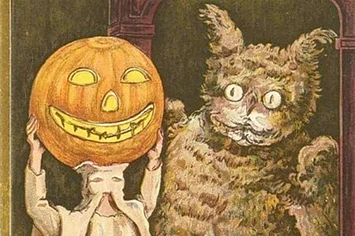

Photos hosted by thenotsoinnocentsabroad.com.