History of CostumesNo. 9050 · The 2026 edition
Halloween costume
Discover the fascinating history behind Halloween costumes.
Our own summary of the original — the full post and photos live at en.wikipedia.org.
This article explores the origins and evolution of Halloween costumes, tracing their roots from ancient Celtic traditions to modern-day celebrations.
About this
A Wikipedia article tracing the history and traditions of Halloween costumes, from possible Celtic and Christian origins through modern mass-produced costumes. It also covers the economics of the costume market, particularly US retail spending, and criticisms such as cultural appropriation and the sexualization of women's costumes. The page mixes historical explanation with consumer-spending statistics and a short list of related topics.
Facts from the original
- Halloween costumes are costumes worn on Halloween, typically while trick-or-treating, which means going door to door to ask for treats.
- Although traditionally based on frightening supernatural or folkloric beings, by the 1930s costumes based on characters from mass media such as film, literature, and radio gained popularity.
- Halloween costumes have traditionally been worn mainly by young people, but since the mid-20th century increasingly by adults as well.
- The custom of wearing Halloween costumes may have originated in a Celtic festival held on October 31 to mark the beginning of winter, at which costumes were worn to ward off evil spirits.
- The festival is called Samhain in Ireland, Scotland, and the Isle of Man, but Calan Gaeaf in Wales, Cornwall, and Brittany.
- The festival is believed to have pre-Christian roots; after the Christianization of Ireland in the 5th century, some of these customs may have been retained in the Christian observance of All Hallows' Eve.
- The time of year was seen as liminal, when spirits or fairies (the Aos Sí) and the souls of the dead could more easily come to the world of the living.
- From at least the 16th century, the festival included mumming and guising, which involved people going door to door in costume or disguise, usually reciting verses or songs in exchange for food.
- Originally, guising may have been a tradition in which people impersonated the Aos Sí or the souls of the dead and received offerings on their behalf.
- Impersonating these beings or wearing a disguise was also believed to protect oneself from them.
- It has been suggested that the mummers and guisers "personify the old spirits of the winter, who demanded reward in exchange for good fortune".
- F. Marian McNeill suggests the ancient pagan festival included people wearing masks or costumes to represent the spirits, and that faces were marked or blackened with ashes from the sacred bonfire.
- In parts of southern Ireland, a man dressed as a láir bhán or white mare led youths house to house reciting verses—some with pagan overtones—in exchange for food; a household that gave food could expect good fortune, while not doing so would bring misfortune.
- In 19th-century England, youths went house to house with masked, painted, or blackened faces, often threatening to do mischief if they were not welcomed.
- In parts of Wales, men went about dressed as fearsome beings called gwrachod, while in some places young people cross-dressed.
- Although mumming and costumes were part of other yearly festivals elsewhere in Europe, in Celtic-speaking regions they were "particularly appropriate to a night upon which supernatural beings were said to be abroad and could be imitated or warded off by human wanderers".
- It has also been suggested that the wearing of Halloween costumes developed from the custom of souling, which was practiced by Christians in parts of Western Europe from at least the 15th century.
- At Allhallowtide, groups of poor people would go house to house collecting soul cakes, either as representatives of the dead or in return for praying for them.
- The Christian tradition of acknowledging the danse macabre is also suggested as the origin of dressing up on Halloween.
- A 19th-century English writer said that Allhallowtide "used to consist of parties of children, dressed up in fantastic costume, who went round to the farmhouses and cottages, singing a song, and begging for cakes (spoken of as 'soul-cakes'), apples, money, or anything that the good wives would give them".
- The soulers typically asked for "mercy on all Christian souls for a soul cake".
- Shakespeare mentioned the practice in his play The Two Gentlemen of Verona (1593).
- Christian minister Prince Sorie Conteh wrote that it was traditionally believed the souls of the departed wandered the earth until All Saints' Day, and that All Hallows' Eve gave the dead one last chance for vengeance before moving to the next world, so people would don masks or costumes to disguise their identities from any soul seeking vengeance.
- In the Middle Ages, statues and relics of martyred saints were paraded through the streets at Allhallowtide; some churches that could not afford these had people dress as saints instead.
- Some believers continue the practice of dressing as saints, biblical figures, and reformers in Halloween celebrations today.
- Many Christians in continental Europe, especially in France, believed that on Halloween "the dead of the churchyards rose for one wild, hideous carnival," known as the danse macabre, which has often been depicted in church decoration.
- An article published by Christianity Today claimed the danse macabre was enacted at village pageants and court masques, with people "dressing up as corpses from various strata of society," and suggested this was the origin of Halloween costume parties.
- The custom of guising at Halloween in North America was first recorded in 1911, when a newspaper in Kingston, Ontario reported children going "guising" around the neighborhood.
- In 19th-century America, Halloween was often celebrated with costume parades and "licentious revelries".
- Efforts were made to "domesticate" the festival to conform with Victorian-era morality: Halloween was made into a private rather than public holiday, celebrations involving liquor and sensuality were de-emphasized, and only children were expected to celebrate the festival.
- Early Halloween costumes emphasized the gothic nature of Halloween and were aimed primarily at children; costumes were also made at home or using items such as make-up that could be purchased to create a costume.
- In the 1930s, A. S. Fishbach, Ben Cooper, and other firms began mass-producing Halloween costumes for sale in stores as trick-or-treating became popular in North America.
- Halloween costumes are often designed to imitate supernatural and scary beings, and traditional costumes include monsters such as vampires, werewolves, zombies, ghosts, and scarecrows.
- Pop culture began to influence costumes after World War II as costume production became more prevalent.
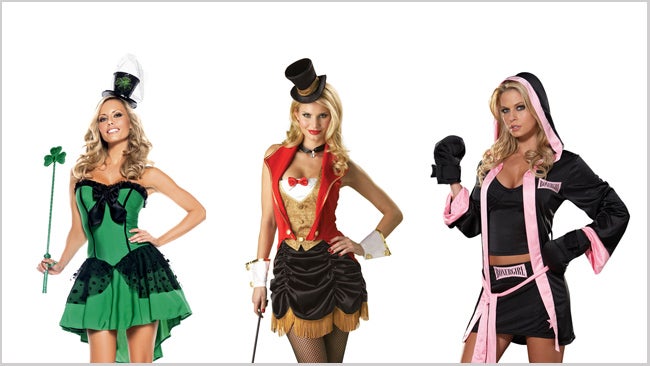
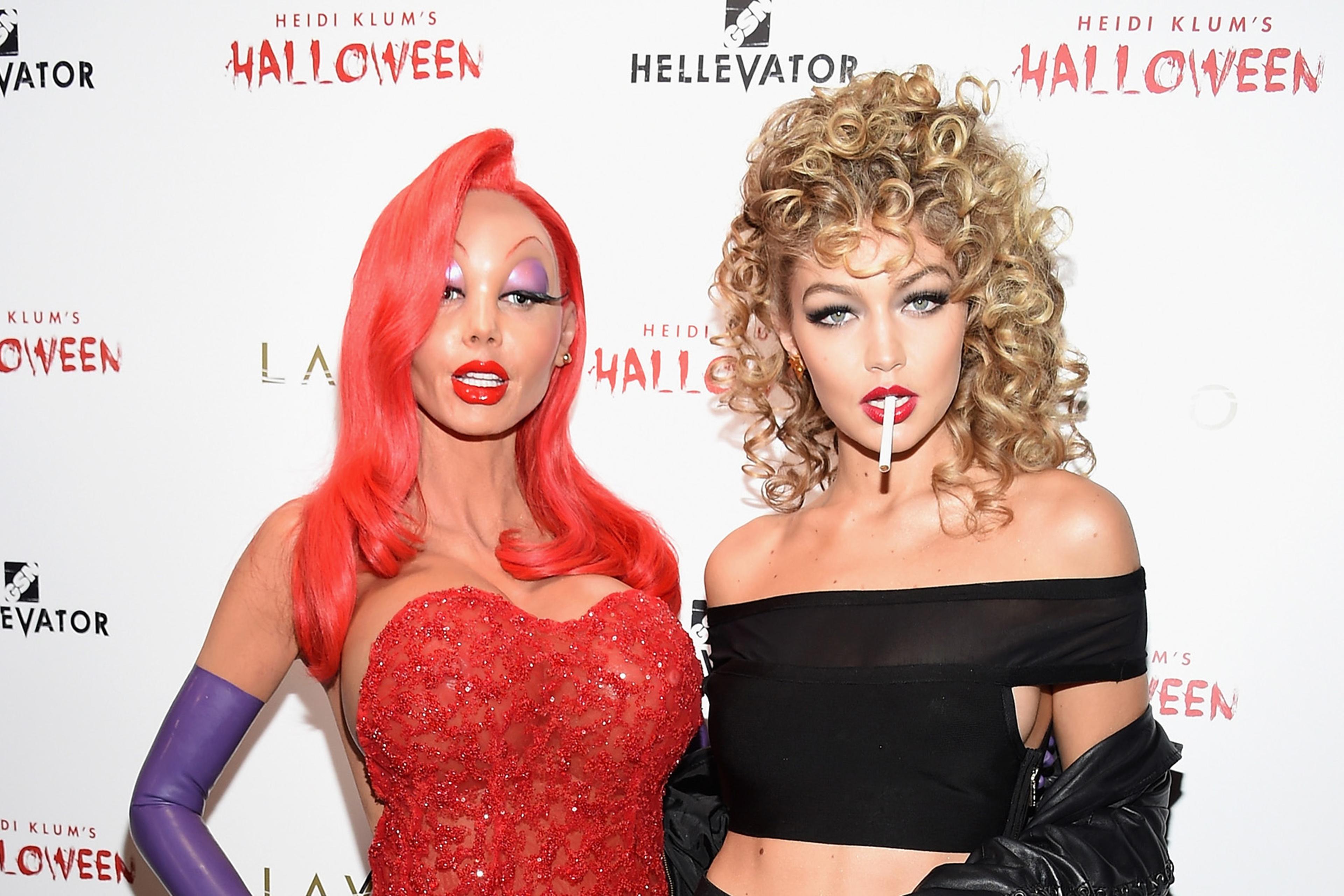
- By the late 20th century, television and movie characters, sexually suggestive, and "campy" costumes rose in popularity with the participation of more adults.
- Halloween costume parties generally take place on or around October 31, often on the Friday or Saturday before the holiday.
- Halloween parties are the third most popular party type held in the United States, falling behind only Super Bowl and New Year's Eve parties.
- In a National Retail Federation study in the United States, 53.3% of consumers planned to buy a Halloween costume in 2005, spending $38.11 on average, up $10 from the year before.
- Consumers were expected to spend $4.96 billion on Halloween in 2006, up significantly from just $3.3 billion the previous year.
- The troubled economy caused many Americans to cut back on Halloween spending, and in 2009 the NRF anticipated that American households would decrease Halloween spending by as much as 15% to $56.31.
- In 2013, Americans spent an estimated $6.9 billion to celebrate Halloween, including a predicted $2.6 billion on costumes (with more spent on adult costumes than for children's costumes) and $330 million on pet costumes.
- In 2017, it was estimated that Americans would spend $9.1 billion on Halloween merchandise, with $3.4 billion of that towards costumes.
- Another NRF survey showed that 67% of Halloween shoppers would buy costumes, spending $3.2 billion in 2019.
- It was estimated that Halloween spending in 2022 would reach $10.6 billion.
- Halloween costumes in the contemporary Western world sometimes depict people and things from present times and are sometimes read in terms of their political and cultural significance.
- When costumes uncritically use stereotypical representations of other groups of people such as gypsies and Native Americans, they are sometimes denounced for cultural appropriation.
- Immigration and Customs Enforcement (ICE) Secretary Julie Myers was involved in a scandal in 2008 at ICE's Halloween party when she made the Best Costume award to someone dressed as an "escaped Jamaican prisoner" with dreadlocks and blackface.
- Halloween costumes can also generate controversy through overt sexualization of many women's costumes, despite a surprisingly long history of it.
- An early 20th-century Irish Halloween mask (a "rhymer" or "vizor") is displayed at the Museum of Country Life in Ireland.
- Facial makeup as masquerade is popular on Halloween, often referring to horror archetypes or various characters from movies or TV shows.
- The printable version note states the printable version is no longer supported and may have rendering errors.
- A maintenance notice flags the article for cleanup, noting a Talk-page discussion about overlap with the "Halloween" article and that citations 3 and 20 are incomplete due to a missing source.
- A maintenance notice states the Economics section needs updating because much of the research cited is quite old and the wording is often predictive.
From the original
Halloween costumes are outfits worn on Halloween, most often while trick-or-treating door to door for treats. Though traditionally drawn from frightening supernatural or folkloric beings, costumes based on mass-media characters from film, literature, and radio became popular by the 1930s. Historically worn mainly by the young, they have increasingly been worn by adults since the mid-20th century. The custom may descend from a Celtic festival held on October 31 to mark the start of winter, when costumes were worn to ward off evil spirits. Called Samhain in Ireland, Scotland, and the Isle of Man, and Calan Gaeaf in Wales, Cornwall, and Brittany, the festival had pre-Christian roots and was seen as a liminal time when fairies (the Aos Sí) and the souls of the dead could cross into the living world; after Ireland's Christianization in the 5th century, some customs were retained in All Hallows' Eve. From at least the 16th century the festival featured mumming and guising, in which people went door to door in disguise reciting verses for food, sometimes impersonating spirits or souls and sometimes disguising themselves for protection from them. Other proposed origins include souling, the danse macabre, and medieval Allhallowtide pageants in which people dressed as saints. Guising in North America was first recorded in Kingston, Ontario, in 1911. Early costumes emphasized gothic themes and were made at home or from bought items; in the 1930s firms such as A. S. Fishbach and Ben Cooper began mass-producing costumes as trick-or-treating spread. Pop culture shaped costumes after World War II, and by the late 20th century TV and movie characters, sexually suggestive, and campy costumes grew popular with more adult participants. Costume parties generally fall on or around October 31. Contemporary criticism focuses on cultural appropriation and overt sexualization.