World TraditionsNo. 4459 · The 2026 edition
Halloween Gains Popularity Among Young Children in China
Explore how Halloween is booming worldwide yet retains unique local flavors.
Our own summary of the original — the full post and photos live at usa.chinadaily.com.cn.
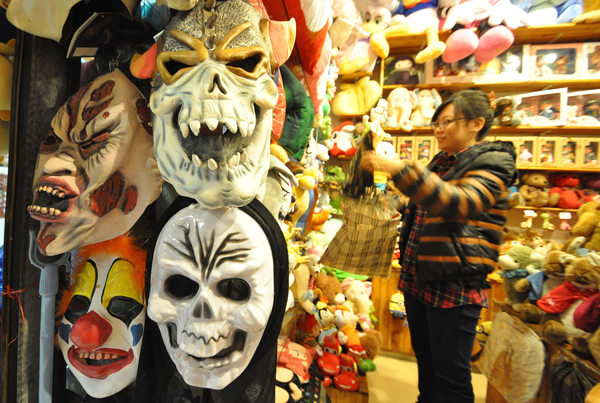
This piece delves into the rising global appeal of Halloween, highlighting how different cultures adapt and reinterpret the holiday. From its ancient origins to modern celebrations, the article examines the blend of commercialization and tradition that makes Halloween a fascinating study in cultural exchange and resistance.
About this
This 2013 China Daily article reports on Halloween's growing popularity among young children in China, especially through kindergarten parties. It presents parents' mixed reactions, concerns about frightening costumes, and examples from Zhengzhou, Shanghai, Nanjing, and Beijing. It also contrasts kindergartens that avoid Halloween with bilingual or international schools that celebrate both Western and Chinese festivals.
Facts from the original
- Halloween has gained increasing popularity among China's youngest generation.
- Many kindergartens hold Halloween parties.
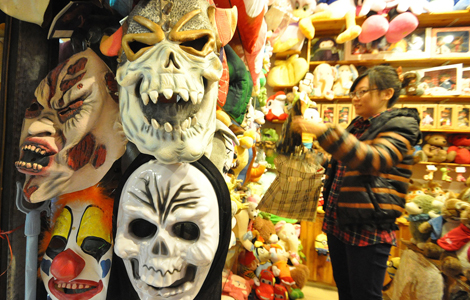
- Complaints from parents and cases of frightened, crying children are also being heard.
- Wang Dan is a mother from Zhengzhou in Henan province.
- Wang Dan said she felt awkward trying to make a pumpkin lantern for her daughter.
- Wang Dan tried using rags, straws and even an LED light tube, but none succeeded.
- After spending 1.5 hours on the pumpkin, Wang Dan was exhausted and just painted some color on it.
- The kindergarten asked parents to make a lantern with their children.
- Wang Dan's 3-year-old could do little to help.
- It was the first time Wang Dan's daughter had attended a Halloween party.
- Days before the festival, the school summoned parents for a meeting, teaching them to make pumpkin lanterns and asking them to make children's costumes by hand.
- Parents also helped decorate the classroom with spiders, cobwebs and witches.
- Wang Dan's daughter was not afraid, but some timid children were scared and had nightmares.
- Cao Yanmei is a mother in Shanghai.
- Cao Yanmei was unhappy when she received a message from her son's teachers asking her to prepare a Halloween costume for her 3-year-old.
- At first Cao Yanmei thought it was not suitable for the kindergarten to expose children to things that aren't peaceful or friendly, like ghosts or evil spirits.
- Cao Yanmei changed her mind quickly because it was a chance for her son to learn different cultures and customs.
- Cao Yanmei avoided terrifying elements when preparing the costume.
- Cao Yanmei chose a pumpkin mask, which she said was more neutral than a bloody mask.
- Cao Yanmei also chose an eye patch and cloak, rather than the popular witch's hat.
- Taobao.com is China's largest online marketplace.
- Han Jing is a mother from Nanjing, the capital of Jiangsu province.
- Han Jing spent 60 yuan ($9.60) to buy a pirate costume from an online store on Taobao.
- Han Jing said she thought the kindergarten wants to promote parent-child time in the name of Halloween.
- Shen Ying is chief of the research section of Haoertong Kindergarten in Shanghai Pudong New Area.
- Shen Ying said the kindergarten never holds Halloween events but pays more attention to traditional Chinese festivals, such as the Chongyang festival that pays respect to the elderly.
- Shen Ying said some private kindergartens with foreign teachers tend to celebrate Western festivals.
- Ivy Schools in Beijing has held Halloween parties since 2008, said Li Yanni, the assistant campus director.
- Nearly half of the children at the bilingual kindergarten are from other countries.
- The bilingual kindergarten celebrates both Chinese and Western festivals.
- Last Halloween, teachers and parents built a haunted house, which scared some girls, causing them to cry.
- Children were also encouraged to shout "trick-or-treat" at shops in the nearby community.
From the original
The article examines how Halloween has become more popular among China's youngest children, with many kindergartens organizing Halloween parties. It notes complaints from parents and reports of frightened, crying children. Wang Dan, a mother in Zhengzhou, Henan, struggled to make a pumpkin lantern for her daughter. After trying rags, straws and an LED light tube without success, she spent 1.5 hours and ended up painting the pumpkin. The kindergarten had told parents to make lanterns with their children, but her 3-year-old could barely help. Days before the festival, the school held a parent meeting to teach pumpkin-lantern making and asked families to hand-make costumes. Parents also decorated the classroom with spiders, cobwebs and witches. Wang said her daughter was not afraid, but other timid children had nightmares. Cao Yanmei, a Shanghai mother, initially objected to kindergarten Halloween activities because ghosts and evil spirits seemed unsuitable, but she changed her mind, seeing it as a cultural-learning opportunity. She chose a pumpkin mask, eye patch and cloak instead of a bloody mask or witch's hat. For parents short on time, Taobao offered an easy alternative: Han Jing from Nanjing bought a pirate costume online for 60 yuan ($9.60), viewing the event as parent-child time. The article then highlights cultural differences. Shen Ying of Haoertong Kindergarten in Shanghai's Pudong New Area said her school skips Halloween and emphasizes Chinese festivals like Chongyang, which honors the elderly. Some private kindergartens with foreign teachers celebrate Western festivals. Ivy Schools in Beijing has held Halloween parties since 2008, said Li Yanni; nearly half its children are from other countries. Last year, a haunted house scared some girls, and children shouted "trick-or-treat" at nearby shops. Li observed Western children wore spooky costumes while Chinese children dressed as cartoon characters, making it feel like a costume ball. Li Yan, a preschool education professor at Shanghai Normal University, supported Halloween parties as a way for children to learn about foreign customs, understand and respect other cultures, and accept cultural diversity.
More photos
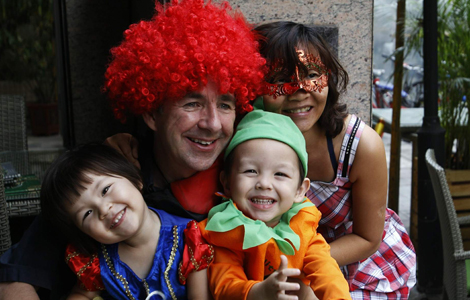
Photos hosted by usa.chinadaily.com.cn.