Trick-or-Treating HistoryNo. 5260 · The 2026 edition
'Trick or Treat': A History
Uncover the spooky origins of 'trick or treat' and how it evolved into the Halloween staple we know today.
Our own summary of the original — the full post and photos live at merriam-webster.com.
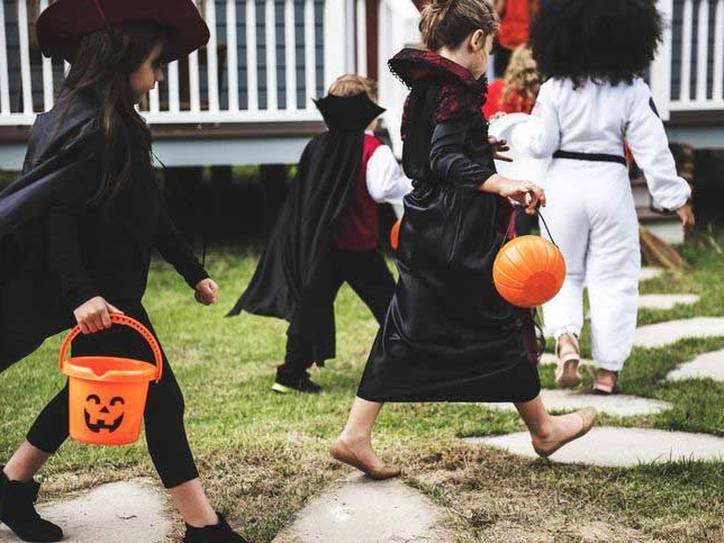
Explore the fascinating history behind the phrase 'trick or treat,' from its ancient Celtic roots and medieval souling practices to its modern American incarnation. Learn how the tradition transformed over centuries, blending folklore, community, and a touch of mischief.
About this
This Merriam-Webster Word History article traces the phrase 'trick or treat' and the Halloween custom behind it. It covers the ancient Samhain origins, the Christianization of All Saints' Day, and the arrival of Halloween customs in the United States. It also presents etymologist Barry Popik's earliest newspaper citations from Canada and the U.S., plus later notes on how the phrase developed.
Facts from the original
- The term 'trick or treat' is closely associated with the holiday of Halloween.
- The true origins of dressing up in costume and going around to houses to greet anyone who answers with a friendly threat are unknown.
- According to Encyclopedia Britannica, the traditions of Halloween have their origins in Samhain, a festival celebrated by the Celts of ancient Britain and Ireland.
- Samhain marked the end of summer and the onset of winter.
- Samhain occurred on a date that corresponds to November 1.
- It was believed that during the Samhain festival the world of the gods was visible to humans.
- The gods took advantage of this visibility by playing tricks on their mortal worshippers.
- Worshippers responded with bonfires on hilltops and sometimes masks and other varied disguises to keep ghosts from being able to recognize them.
- Things tended to get spooky and dangerous around Samhain, with bloody sacrifices and supernatural phenomena abounding.
- In the 8th century CE, All Saints' Day, a somewhat new Christian holiday, was moved from May 13th to November 1st.
- The evening before All Saints' Day became a holy, that is, a hallowed, eve.
- Within a few centuries, Samhain and the eve of All Saints' Day had been merged into a single holiday.
- Protestants of the Reformation and all that came after largely rejected the whole thing.
- The holiday persisted among some communities.
- 19th-century immigrants to the U.S., including many from Ireland, brought their Halloween customs with them.
- Those 19th-century immigrants deserve no small amount of credit for the holiday as it is celebrated in the U.S. today.
- Trick-or-treating took some time to settle in.
- Barry Popik is an independent etymologist and the authority on how the term trick or treat first settled into the lexicon.
- Barry Popik has also uncovered the mysteries behind culturally important terms such as hot dog and Big Apple.
- Barry Popik found the earliest known examples of trick or treat in use.
- Popik's research traces early iterations of the term to the northwestern part of North America, specifically the Canadian provinces of Alberta and Saskatchewan.
- The Leader-Post (Regina, Saskatchewan), 2 Nov. 1923, reported that Halloween passed off very quietly there and that 'treats' not 'tricks' were the order of the evening.
- Red Deer (Alberta) Advocate, 7 Nov. 1924, reported that Halloween night was observed in the usual manner by the young 'bloods' in Penhold, and complained that when school and Memorial Hall were molested with no option for 'Treat or Trick,' it could not see where either fun or trick was enjoyed by the participants.
- A few years later, the phrase is used in a more familiar way.
- T. D. Colcord in Calgary (Alberta) Daily Herald, 3 Nov. 1927, wrote that Halloween was observed circumspectly in town without the usual depredations, that the very young wandered in droves from door to door heavily disguised and demanding 'trick or treat,' and that to treat was to be untricked, with the youthful hold-up men returning home bowed down with treats.
- Lethbridge (Alberta) Herald, 4 Nov. 1927, described Halloween as an opportunity for real strenuous fun, with no real damage except to the temper of some who had to hunt for wagon wheels, gates, wagons, barrels, etc., and with youthful tormentors at back door and front demanding edible plunder by the word 'trick or treat,' to which the inmates gladly responded and sent the robbers away rejoicing.
- The first U.S. example Popik reports is from Michigan and uses the plural form.
- Bay City (Michigan) Times, 1 Nov. 1928, ran the headline 'Trick or Treats?' and described peaceful citizens living in terror of being summoned to their front doors to hear the fatal ultimatum 'Tricks or treats!' uttered in a merciless tone by a small child clutching a small chunk of soap capable of eliminating the transparency from windows.
- The earliest example in Merriam-Webster's files is from 12 years after the Michigan example.
- John Valentine, in a letter in American Notes and Queries, March 1942, reported that the local equivalent in Decatur, Illinois, was 'Trick or treat,' that children masked and in costume knocked at front doors and greeted the host with 'Trick or treat!' in a somewhat disguised voice, and that the proposal was a mild kind of blackmail in which the treats were always forthcoming.
- The 1942 letter was responding to an article entitled 'Halloween: Shell Out.'
- Shell out was another phrase employed in the same context.
- Trick or treat as a set phrase had yet to fully gel as late as 1965.
- In 1965, in a Peanuts cartoon, Charles Schulz has Lucy engaged in the activity with the words 'TRICKS OR TREATS...' in the speech bubble hovering above her.
- In 1972, a Merriam-Webster editor wrote a note objecting to the defining of trick or treat as 'the Halloween practice' rather than 'a Halloween practice.'
- The editor argued that the beginning word 'the' made it sound like a universal practice and noted never hearing of it when a child in southern Illinois, suggesting 'a' instead.
- The definition was revised accordingly.
From the original
The article explores the history of the term trick or treat and the Halloween practice it describes. It notes that the true origins of costumed door-to-door threatening are unknown, but Encyclopedia Britannica traces Halloween traditions to Samhain, the Celtic festival marking summer's end and winter's start around November 1. During Samhain, gods were thought to be visible and prone to tricking humans; people lit hilltop bonfires and sometimes wore masks or disguises so ghosts would not recognize them. The occasion could be spooky and dangerous, with bloody sacrifices and supernatural events. In the 8th century CE, All Saints' Day was moved from May 13 to November 1, making the previous evening a hallowed eve. Over centuries, Samhain and All Saints' Eve merged. Reformation Protestants largely rejected the holiday, but it survived in some communities, and 19th-century immigrants, especially from Ireland, brought Halloween customs to the United States. The phrase trick or treat took time to settle. Independent etymologist Barry Popik found its earliest known uses in Alberta and Saskatchewan newspapers, including a 1923 Regina Leader-Post mention of treats over tricks and 1924 Red Deer Advocate and 1927 Calgary and Lethbridge examples using trick or treat in a more familiar sense. The first U.S. example Popik reports is a 1928 Bay City, Michigan, use in the plural, 'Tricks or treats.' Merriam-Webster's earliest file example is a March 1942 American Notes and Queries letter from Decatur, Illinois. The phrase had not fully gelled by 1965, when a Peanuts cartoon had Lucy say 'TRICKS OR TREATS,' and in 1972 a Merriam-Webster editor successfully argued for defining it as 'a' rather than 'the' Halloween practice.
More photos

Photos hosted by merriam-webster.com.