Trick-or-Treating HistoryNo. 7226 · The 2026 edition
Trick or Treat? Not quite sure.
Ever wonder why we dress up and knock on doors for candy? The roots of this spooky tradition stretch back centuries, blending ancient rituals with modern fun. Let's explore the fascinating journey of
Our own summary of the original — the full post and photos live at blog.beliefnet.com.
Halloween's origins are a mix of ancient Celtic festivals, Christian influences, and evolving customs. The holiday began with Samhain, a Celtic festival marking the end of the harvest season and the beginning of winter. During Samhain, people believed the boundary between the living and the dead blurred, allowing spirits to roam the earth. To ward off these spirits, they lit bonfires and wore costumes. Over time, Christian traditions merged with these practices, leading to All Saints' Day and All Souls' Day. The term 'Halloween' comes from 'All Hallows' Eve.' As immigrants brought their custom
About this
A Beliefnet "Om Sweet Om" column by Vineet Chander on the clash between Halloween and Hinduism, and on whether children should dress as Hindu deities.
Facts from the original
- The essay "Trick or Treat? Not quite sure." was written by Vineet Chander for the Beliefnet column Om Sweet Om in October 2009.
- Chander says that growing up, he experienced Halloween as a clashing of cultures more than any other American holiday.
- Hindus use a lunar calendar, so the exact dates of Hindu holidays switch around.
- Halloween often coincides with Hindu holidays; when Diwali fell on October 31 the two holidays went head-to-head.
- On such conflicts, Chander could either go trick-or-treating and watch a Nightmare on Elm Street marathon, or visit temple and exchange sweets with relatives — but not both.
- Even without a direct clash, Chander felt a disconnect between his parents' world and the American suburban world around him.
- His mother called Halloween a depressing holiday while suspiciously surveying plastic skeletons and cardboard tombstones decorating neighbors' lawns.
- His father called the holiday a waste of time even as he begrudgingly bought bags of cheap candy to hand out to trick-or-treaters.
- Some of his parents' more orthodox Hindu friends objected more strongly, calling the meditation on death and gore and the open celebration of ghosts and goblins ashubh, or inauspicious.
- His parents proudly displayed the jack-o-lanterns he and his sister carved at school, but the family never carved one together.
- They doled out candy to neighborhood kids without the gusto of other parents, who often dressed up themselves and distributed treats in character.
- They were content to let the children go trick-or-treating, though Chander does not recall them getting excited about it.
- Most years, as long as it wasn't too expensive, the children convinced their parents to buy whatever superhero or horror movie monster costume was popular that year.
- In some years, Desi parents dressed their children as an "Indian prince" or "Indian princess" by putting them in their finest Indian party clothes, sometimes adding a makeshift turban or tiara.
- The neighbors loved the Indian prince/princess costumes, the parents felt a mix of cultural pride and money saved, and the children thought the idea was incredibly lame.
- Years later, Indian-American kids co-opted the tactic by willingly wearing kurta pyjama or salwar kameez outfits to get candy without buying a costume.
- Looking back, Chander appreciates the mingling of cultures that the holiday engendered.
- Now a parent himself, Chander wonders how to minimize the culture clash for his own Indian-American daughter and how to integrate Halloween and Hinduism for her.
- A Christian colleague asked Chander what he thought about having kids dress up as Hindu deities, a question that caught him off guard.
- Chander distinguishes a bindi-wearing Indian Princess from dressing up like a goddess.
- He wondered whether such costumes would celebrate Hinduism's rich imagery or mock faith, whether they would share Hindu beliefs or fuel stereotypes and marginalize Hindus, and how Hindu kids themselves would feel.
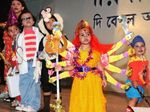
- There is precedent in Hinduism for dressing up as deities.
- Many parents dress their children as Lord Krishna on Krishna Janmashtami.
- Ramleela — dramatic re-enactments of Lord Rama's epic pastimes — involve children and adults donning costumes to depict figures such as Lord Rama, the brave Hanuman, or the demon king Ravana.
- There is a Bengali tradition of dressing as the goddess Kali — with blood-red tongue, carrying a machete, and wearing a garland of skulls — for the holiday of Kali Puja every October/November.
- Chander calls the Kali Puja tradition the closest direct link between Halloween and Hinduism he has found.
- Some Hindu temples have started using Halloween as a way to connect Hindu kids to their faith.
- A Krishna temple in New Jersey holds a Halloween costume contest for children dressed as characters from the life of Lord Krishna.
- Chander worries that taking deity costumes into the mainstream may mock faith, citing the controversy over Heidi Klum's Kali costume and Sayantani Dasgupta's charge of cultural appropriation.
- Chander ends the essay undecided, asking readers for their own thoughts on Halloween and Hinduism.
From the original
In this October 2009 installment of Beliefnet's "Om Sweet Om" column, Vineet Chander reflects on the culture clash Halloween created as he grew up Hindu in American suburbia. Because Hindus follow a lunar calendar, Hindu holidays sometimes land on October 31 — when Diwali coincided with Halloween, he had to choose between trick-or-treating (and a Nightmare on Elm Street marathon) and visiting temple to swap sweets with relatives. His immigrant parents disapproved: his mother called the holiday depressing while eyeing neighbors' plastic skeletons and cardboard tombstones, his father grudgingly bought cheap candy for trick-or-treaters, and more orthodox friends dismissed the fixation on death and gore as ashubh, or inauspicious. The family displayed jack-o-lanterns the kids made at school but never carved one together, handed out candy without much enthusiasm, and tolerated cheap superhero or monster costumes. Some Desi parents dressed their children as "Indian princes/princesses" in fine Indian party clothes plus a makeshift turban or tiara — a move the kids found lame but later re-purposed to collect candy without buying costumes. Now a parent himself, Chander wonders how to blend Halloween and Hinduism for his Indian-American daughter. Asked by a Christian colleague about children dressing as Hindu deities, he notes precedent: kids dressed as Lord Krishna on Krishna Janmashtami, Ramleela re-enactments with costumes of Rama, Hanuman, and the demon king Ravana, and a Bengali tradition of dressing as the goddess Kali for Kali Puja. A New Jersey Krishna temple even hosts a Halloween costume contest for characters from Krishna's life. Yet he worries that moving deity costumes into the mainstream may mock faith, citing the controversy over Heidi Klum's Kali costume and Sayantani Dasgupta's charge of cultural appropriation. He ends undecided, asking readers what they think.
More photos

Photos hosted by blog.beliefnet.com.