Trick-or-Treating HistoryNo. 1334 · The 2026 edition
Trick-or-treating
Discover the spooky origins of the modern trick-or-treat tradition, from medieval 'souling' to 20th-century candy hauls.
Our own summary of the original — the full post and photos live at en.wikipedia.org.
Trick-or-treating, a Halloween custom where children dress in costumes and go door-to-door asking for treats, has roots in medieval European practices like souling and guising. It evolved in North America through various community events and became widespread in the early 20th century.
About this
A Wikipedia history page tracing the Halloween custom of trick-or-treating from ancient and medieval precursors through its spread to North America and its modern regional variants. It covers souling, mumming, Samhain, guising, the origin of the phrase, etiquette, and local practices worldwide.
Facts from the original
- Trick-or-treating is a traditional Halloween custom for children and adults in some countries.
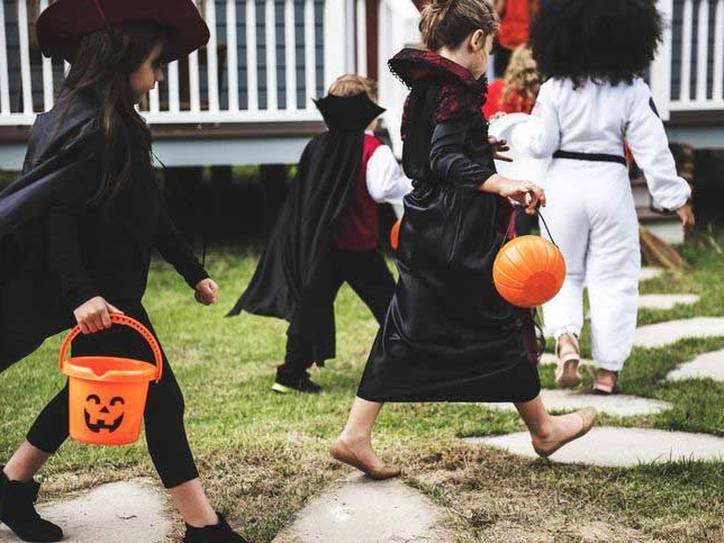
- On the evening of October 31, people in costumes travel from house to house asking for treats with the phrase 'trick or treat.'
- The treat is some form of confectionery, usually candy or sweets, although in some cultures money is given.
- The 'trick' refers to a threat, usually idle, to perform mischief on residents or their property if no treat is given.
- Some people signal willingness to hand out treats by putting up Halloween decorations; houses may leave porch lights on as a universal indicator, and some leave treats on porches on the honour system.
- The history of trick-or-treating traces back to Scotland and Ireland, where guising goes back at least to the 16th century.
- Guising is going house to house at Halloween and putting on a small performance to be rewarded with food or treats.
- Wearing costumes at Halloween also goes back at least as far as the 16th century.
- There are many accounts from 19th-century Scotland and Ireland of people going house to house in costume at Halloween reciting verses for food, sometimes warning of misfortune.
- The earliest known occurrence of guising in North America is from 1898, in British Columbia, Canada.
- The interjection 'trick or treat!' was first recorded in the Canadian province of Ontario in 1917.
- Saying 'trick or treat' became common in Scotland and Ireland only in the 2000s; before that Irish children commonly said 'help the Halloween party.'
- The activity is prevalent in the UK, Ireland, the US and Canada, and has extended into Mexico.
- In northwestern and central Mexico the practice is called calaverita, and children ask '¿Me da mi calaverita?'; a calaverita is a small skull made of sugar or chocolate.
- The ancient Greek writer Athenaeus records that Rhodes had a custom of children going door-to-door dressed as swallows, singing, demanding food and threatening mischief if refused.
- The Rhodian swallow tradition was claimed to have been started by the lawgiver Cleobulus.
- Starting as far back as the 15th century, Christians shared soul-cakes at Allhallowtide (October 31 through November 2).
- People visited houses and took soul-cakes either as representatives of the dead or in return for praying for their souls.
- People went from parish to parish at Halloween begging soul-cakes by singing under the windows.
- Souling was recorded in parts of Britain, Flanders, southern Germany, and Austria.
- William Shakespeare mentions the practice in his comedy The Two Gentlemen of Verona (1593).
- In western England, mostly in counties bordering Wales, souling was common.
- A 19th-century English writer described parties of children in fantastic costume going round farm houses and cottages singing and begging for cakes, apples, money, or whatever the goodwives would give.
- In England souling remained an important part of Allhallowtide observances until the 19th century, in both Protestant and Catholic areas.
- Giving and eating soul cakes continues today in Portugal (Pão-por-Deus, on All Hallows' Day and All Souls' Day) and the Philippines (Pangangaluwa, on All Hallows' Eve).
- Souling is seen as the origin of the practice of trick-or-treating.
- In the United States some churches invite people to receive sweets during Allhallowtide and offer to pray for the souls of friends, relatives or even pets.
- Since the Middle Ages a tradition of mumming existed in parts of Britain and Ireland: going door-to-door in costume and performing short scenes or plays for food or drink.
- Trick-or-treating may come from the belief that supernatural beings, or the souls of the dead, roamed the earth at this time and needed to be appeased.
- It may have originated in the Celtic festival Samhain, held 31 October–1 November, marking winter's beginning in Ireland, Scotland and the Isle of Man, and Calan Gaeaf in Wales, Cornwall and Brittany.
- The festival is believed to have pre-Christian roots.
- In the 9th century the Catholic Church made 1 November All Saints' Day.
- Among Celtic-speaking peoples it was seen as a liminal time when spirits or fairies (the Aos Sí) and the souls of the dead came into the world and were appeased with offerings of food and drink.
- S. V. Peddle suggests they personify the old spirits of the winter, who demanded reward in exchange for good fortune.
- Impersonating these spirits or souls was also believed to protect oneself from them.
- In Scotland and Ireland guising is secular, and a gift of food, coins or 'apples or nuts for the Halloween party' (more recently chocolate) is given to the children.
- The tradition is called guising because of the disguises or costumes worn by the children.
- In the West Mid Scots dialect, guising is known as galoshans.
- In Scotland youths went house to house in white with masked, painted or blackened faces, reciting rhymes and often threatening mischief if not welcomed.
- Guising has been recorded in Scotland since the 16th century, often at New Year.
- The Kirk Session records of Elgin name men and women who danced at New Year 1623; six men called guisers performed a sword dance wearing masks and visors, in the churchyard and a house courtyard, and were each fined 40 shillings.
- A record of Halloween guising in Scotland in 1895 describes masqueraders in disguise carrying lanterns made from scooped out turnips, visiting homes for cakes, fruit and money.
- Halloween masks are referred to as 'false faces' in Ireland and Scotland.
- A writer using Scots language recorded guisers in Ayr, Scotland in 1890, mentioning boys with false faces and turnip lanterns.
- Guising also involved going to wealthy homes; in the 1920s boys went guising at Halloween up to the affluent Thorntonhall, South Lanarkshire.
- An account of guising in the 1950s in Ardrossan, North Ayrshire records a child receiving 12 shillings and sixpence after knocking on doors and performing.
- Growing up in Derry, Northern Ireland in the 1960s, journalist Michael Bradley recalls children asking 'Any nuts or apples?'
- In Scotland and Ireland children are only supposed to receive treats if they perform a party trick, normally singing a song or reciting a joke or funny poem memorised beforehand.
- Author Nicholas Rogers cites an early example of guising in North America in 1911, reported by a newspaper in Kingston, Ontario, Canada.
- The 1911 article described children disguised with masks and costumes visiting corner grocery stores, hotels and private residences, rewarded with money, apples, nuts, etc.
- American historian Ruth Edna Kelley of Massachusetts wrote the first book-length history of the holiday in the United States, The Book of Hallowe'en (1919), and references souling.
- Kelley lived in Lynn, Massachusetts, a town with 4,500 Irish, 1,900 English and 700 Scottish immigrants in 1920.
- Another reference to ritual begging on Halloween appears, place unknown, in 1915, with a third reference in Chicago in 1920.
- The interjection 'Trick or treat!' seems to have arisen in central Canada, spreading into the northern and western United States in the 1930s and across the rest of the US through the 1940s and early 1950s.
- Initially it was often found in variant forms such as 'tricks or treats,' used in the earliest known case, a 1917 report in The Sault Daily Star in Sault Ste. Marie, Ontario.
- Word sleuth Barry Popik also found the first use from 1917; variants continued: 'trick or a treat' in Chatsworth, Ontario in 1921; 'treat up or tricks' and 'treat or tricks' in Edmonton in 1922; 'treat or trick' in Penhold, Alberta in 1924.
- The canonical form 'trick or treat' was first seen in 1917 in Chatsworth, one day after the Sault Ste. Marie use.
- 'Tricks or treats' was still in use in the 1966 television special It's the Great Pumpkin, Charlie Brown.
- The thousands of Halloween postcards produced between the start of the 20th century and the 1920s commonly show children but do not depict trick-or-treating.
- Trick-or-treating does not seem to have become widespread until the 1930s, with the first appearance in the US of the term in 1928 and the first known use in a national publication in 1939.
- Behavior similar to trick-or-treating was more commonly associated with Thanksgiving from 1870 until the 1930s; in New York City, Ragamuffin Day involved children dressing up as beggars asking for treats.
- Increasing hostility in the 1930s led to the begging aspects being dropped, and by the 1950s the tradition as a whole had ceased.
- Almost all pre-1940 uses of the term 'trick-or-treat' are from the United States and Canada.
- Trick-or-treating spread throughout the United States, stalled only by World War II sugar rationing from April 1942 until June 1947.
- Early national attention came in October 1947 issues of the children's magazines Jack and Jill and Children's Activities, and by Halloween episodes of The Baby Snooks Show in 1946 and The Jack Benny Show and The Adventures of Ozzie and Harriet in 1948.
- Trick-or-treating was depicted in the Peanuts comic strip in 1951.
- The custom had become firmly established in popular culture by 1952, when Walt Disney portrayed it in the cartoon Trick or Treat and Ozzie and Harriet were besieged by trick-or-treaters on their TV show.
- In 1953 UNICEF first conducted a national campaign for children to raise funds for the charity while trick-or-treating.
- Des Moines, Iowa is the only area known to have a record of trick-or-treating being used to deter crime.
- Adults, as reported in newspapers from the mid-1930s to the mid-1950s, typically saw trick-or-treating as a form of extortion, with reactions from bemused indulgence to anger.
- For Halloween 1948, members of the Madison Square Boys Club in New York City carried a parade banner reading 'American Boys Don't Beg.'
- The National Confectioners Association reported in 2005 that 80 percent of US adults planned to give out confectionery to trick-or-treaters, and that 93 percent of children, teenagers and young adults planned to go trick-or-treating or take part in other Halloween activities.
- Despite originating in Britain and Ireland as souling and guising, use of the term 'trick or treat' at doors was not common until the 1980s, popularised in part by the film E.T.
- Guising requires those going door-to-door to perform a song or poem without any jocular threat.
- According to one BBC journalist, in the 1980s 'trick or treat' was still often viewed as an exotic and unwelcome import, with the BBC calling it 'the Japanese knotweed of festivals' and 'making demands with menaces.'
- Very often the phrase 'trick or treat' is simply said and the revellers are given sweets, with the choice of a trick or a treat having been discarded.
- Trick-or-treating typically begins at dusk on October 31, though some municipalities choose other dates.
- Homeowners wishing to participate sometimes decorate with artificial spider webs, plastic skeletons and jack-o-lanterns; those not wishing to participate may turn off outside lights or lock gates and fences.
- In most areas where trick-or-treating is practiced it is considered an activity for children; some US jurisdictions forbid it for anyone over the age of 12.
- Dressing up is common at all ages; adults often dress up to accompany children, and young adults may dress up to ask for gifts for a charity.
- In the St. Louis, Missouri and Des Moines, Iowa areas, children are expected to perform a joke, usually a Halloween-themed pun or riddle, before receiving candy.
- In the Des Moines area trick-or-treating is arranged on a different night preceding Halloween, known as Beggar's night, to reduce mischief and keep children safer.
- In some parts of Canada children sometimes say 'Halloween apples' instead of 'trick or treat,' probably originating when the toffee apple was a popular candy.
- Apple-giving in much of Canada has been taboo since the 1960s when stories appeared of razors hidden inside Halloween apples; parents began checking fruit for safety.
- In Quebec children go door to door on Halloween; in French-speaking neighbourhoods they say 'Halloween' instead of 'Trick or treat,' though it traditionally used to be 'La charité, s'il-vous-plaît.'
- Some organizations around the US and Canada sponsor a 'trunk-or-treat' on Halloween night or a nearby day, done from parked car to parked car in a local parking lot, often at a school or church.
- Trunk-or-treating makes use of the open trunks of cars, which display candy, and often games and decorations.
- Some parents regard trunk-or-treating as a safer alternative to trick-or-treating, while others see it as an easier alternative to walking the neighborhood.
- The annual event began in the mid-1990s as a 'fall festival' alternative to trick-or-treating and became 'trunk-or-treat' two decades later, primarily due to discomfort with some of Halloween's themes.
- Some churches and church leaders view Halloween as an opportunity for cultural engagement with the Gospel; some have called for more city or community group-sponsored trunk-or-treats to be more inclusive.
- By 2006 trunk-or-treats had become increasingly popular.
- In Portugal children go from house to house on All Saints Day and All Souls Day carrying pumpkin carved lanterns called coca, asking for Pão-por-Deus and singing rhymes about the deceased.
- In the Azores the bread given to the children takes the shape of the top of a skull.
- The tradition of pão-por-Deus was already recorded in the 15th century.
- In Galicia, particularly on the island of A Illa de Arousa, children ask for alms (usually bread, sweets, fruits, chestnuts, money or small toys) with the phrase 'unha esmoliña polos defuntiños que van alá.'
- In Sweden children dress up as witches and monsters and go trick-or-treating on Maundy Thursday; Danish and Faroese children go on Fastelavn or Shrove Monday; Norwegian children come dressed up asking mainly for candy; Finland's Easter witch tradition is on Palm Sunday (virvonta).
- In parts of Flanders, some parts of the Netherlands, and most areas of Germany, Switzerland and Austria, children go to houses with home-made beet lanterns or paper lanterns, singing songs about St. Martin on St. Martin's Day (11 November) in return for treats.
- Over the last decade Halloween trick-or-treating has surged in popularity in Germany, particularly among children and teenagers; Austria and the Netherlands show a similar trend.
- The German equivalent of 'trick-or-treat' is 'Süßes oder Saures,' meaning sweet or sour.
- In Northern Germany and Southern Denmark children dress up and go trick-or-treating on New Year's Eve in a tradition called Rummelpott, which has decreased in popularity though some towns are trying to revive it.
- UNICEF started Trick-or-Treat for UNICEF in 1950, in which trick-or-treaters ask people to give money for the organization, usually instead of collecting candy, saying 'Trick-or-treat for UNICEF!'
- The UNICEF program started as an alternative to candy and the organization has long produced disposable collection boxes stating what the money can be used for in developing countries.
- In Canada, students from local high schools, colleges and universities dress up to collect food donations for local Food Banks as a form of trick-or-treating, sometimes called 'Trick-or-Eat.'
From the original
Trick-or-treating is a Halloween custom in which, on the evening of October 31, people in costumes go from house to house asking for treats with the phrase 'trick or treat.' The treat is usually candy or sweets, sometimes money, while the 'trick' is an idle threat of mischief if no treat is given. Households signal participation with decorations or porch lights, and some leave treats out on an honour system. The practice is prevalent in the UK, Ireland, the US and Canada, and has extended into Mexico as calaverita. Its roots reach back to classical antiquity, though direct links are unlikely: Athenaeus recorded Rhodian children going door to door dressed as swallows demanding food. Medieval Christians shared soul-cakes at Allhallowtide in a practice called souling, and mumming involved costumed door-to-door performances for food or drink. The Celtic festival Samhain, a liminal time when spirits and the dead were appeased with offerings, is another proposed origin. Guising, going house to house in disguise at Halloween, is recorded in Scotland and Ireland from at least the 16th century, with children performing songs, jokes or poems for treats. Guising reached North America by 1898 in British Columbia; the phrase 'trick or treat' was first recorded in Ontario in 1917. The custom spread through the US in the 1930s–1950s, later reaching UK and Irish doorsteps in the 1980s.